A Modest Bungalow in the Dimond District
This bungalow renovation is located in Oakland, California, in the Dimond District, a neighborhood our clients love deeply and where they are socially and culturally embedded. The project began with a modest cottage that was structurally sound but limited by its layout, aging systems, and lack of flexibility for modern family life.
The house was small, but the challenge was not simply one of size. The original ground floor spaces were impractical, with poor circulation, limited natural light, and little acoustic separation between rooms.
Rather than leaving the neighborhood they loved, the family chose to renovate – transforming a single storey bungalow into a home carefully tailored for long-term living, learning, and working.
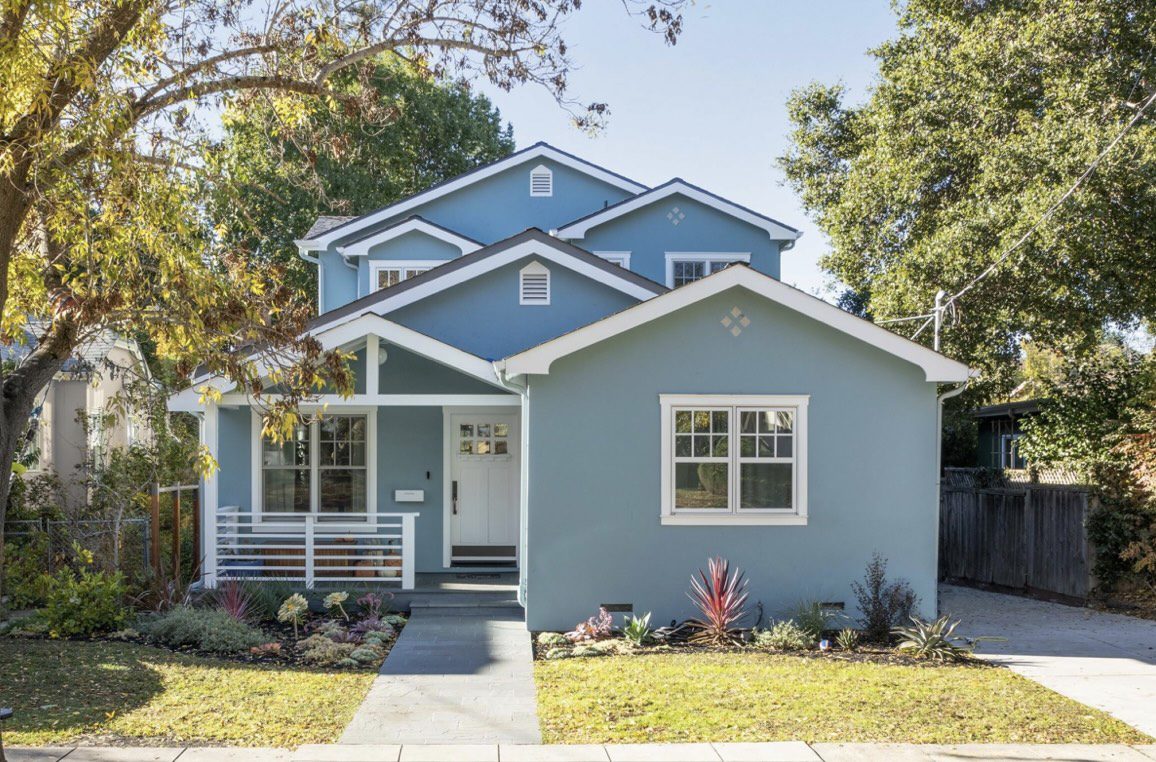
Front exterior of the bungalow after renovation
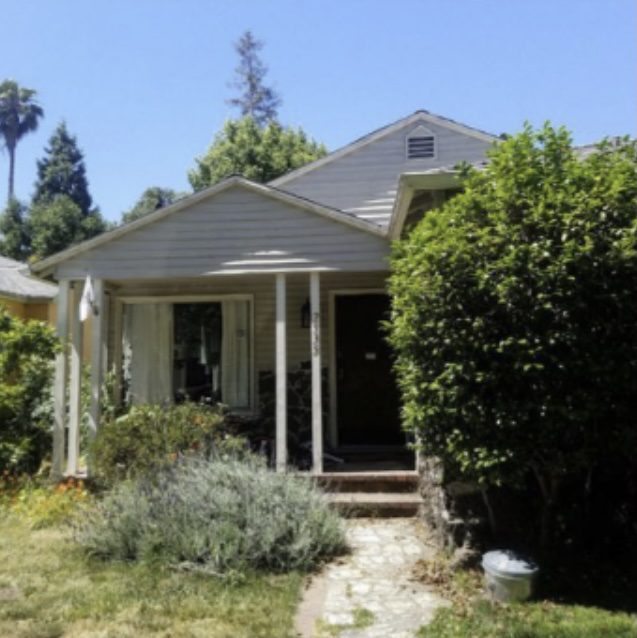
Before renovation
Scale of the home
Although the renovation includes a second story addition, the exterior was designed to avoid a boxy or oversized appearance.
Multiple gabled roof forms, bay windows, three small porches, and other details help break down the scale of the exterior walls. The house feels substantial without overpowering the yard or neighboring homes.
Designing for Long-Term Family Life
From the beginning, the renovation was guided by how the family wanted to live – both now and in the future. The clients needed dedicated spaces for homeschooling and working from home, alongside rooms that made it easy to be together as a family and spend time with visitors.
Rooms were planned with flexibility in mind. Spaces that currently serve as offices or study areas can adapt to different uses in the future, whether as guest rooms, creative spaces, or quiet retreats. Storage was designed to accommodate changing household patterns without requiring major alterations.
The decision to work within a smaller footprint also supports long-term sustainability. By making efficient use of space rather than relying on excess square footage, the house remains manageable, energy-efficient, and adaptable.
This forward-looking approach allows the house to grow with the family rather than becoming obsolete as circumstances change. This bungalow renovation was not about creating the biggest house possible, but about creating a family house that feels intuitive, supportive, and easy to inhabit every day.
Living Comfort, Acoustics, and Neurological Calm
One of the quieter but most important goals of this renovation was to support neurological calm. In a family home where multiple activities happen at once – studying, working, cooking, resting – the quality of sound, light, and spatial separation has a significant impact on daily experience.
Acoustic separation was carefully considered throughout the house. Walls, doors, and room adjacencies were designed so that focused work or quiet activities could happen without being disrupted by movement or conversation elsewhere. This was especially important for homeschooling and working from home, where sustained concentration matters.
Visual order also plays a role in comfort. Clear spatial order, logical circulation, well-defined rooms, and thoughtful storage reduce background stress and make the house easier to use intuitively. Rather than relying on open-plan space alone, the design balances openness with enclosure so that each room can function well independently.
Material choices reinforce this sense of calm. Natural finishes, warm colors, and tactile surfaces create a grounded interior that feels welcoming rather than overstimulating. Together, these strategies help the house support not just activity, but well-being.
A Thoughtful Relationship to Neighborhood and Site
While the renovation significantly expanded the house, equal care was given to how it fits within its neighborhood and site.
The Dimond District is characterized by modestly scaled homes and a strong sense of community. The addition was carefully shaped to respect that context, with roof forms and setbacks that reduce visual bulk and maintain a comfortable relationship to neighboring houses.
Privacy and openness were balanced thoughtfully. The house presents a welcoming face to the street while maintaining a sense of refuge inside. Outdoor spaces are oriented to feel protected and usable without turning inward or isolating the house from its surroundings.
By responding to both the social and physical context of the site, the renovation strengthens the connection between the house, the neighborhood, and the people who live there.
Making the Most of a Smaller Footprint
Working within a smaller footprint requires careful decision-making. Every room, every wall, and every circulation path matters.
Instead of overbuilding, we focused on how spaces relate to one another – visually, acoustically, and functionally. Rooms are sized intentionally, storage is integrated throughout, and furniture layouts were considered early in the design process.
The result is a house that lives larger than it is, demonstrating how strong bungalow renovation ideas can outperform sheer square footage.
A Transitional Interior Design Approach
The interior design blends traditional elements with a modern layout, creating a transitional style that feels both familiar and current.
Original architectural character was respected, while new interventions were designed to be calm, simple, and well proportioned. This balance allows the house to feel timeless rather than trend-driven.
Materials throughout the interior were chosen for durability, warmth, and low toxicity, supporting both comfort and long-term health.
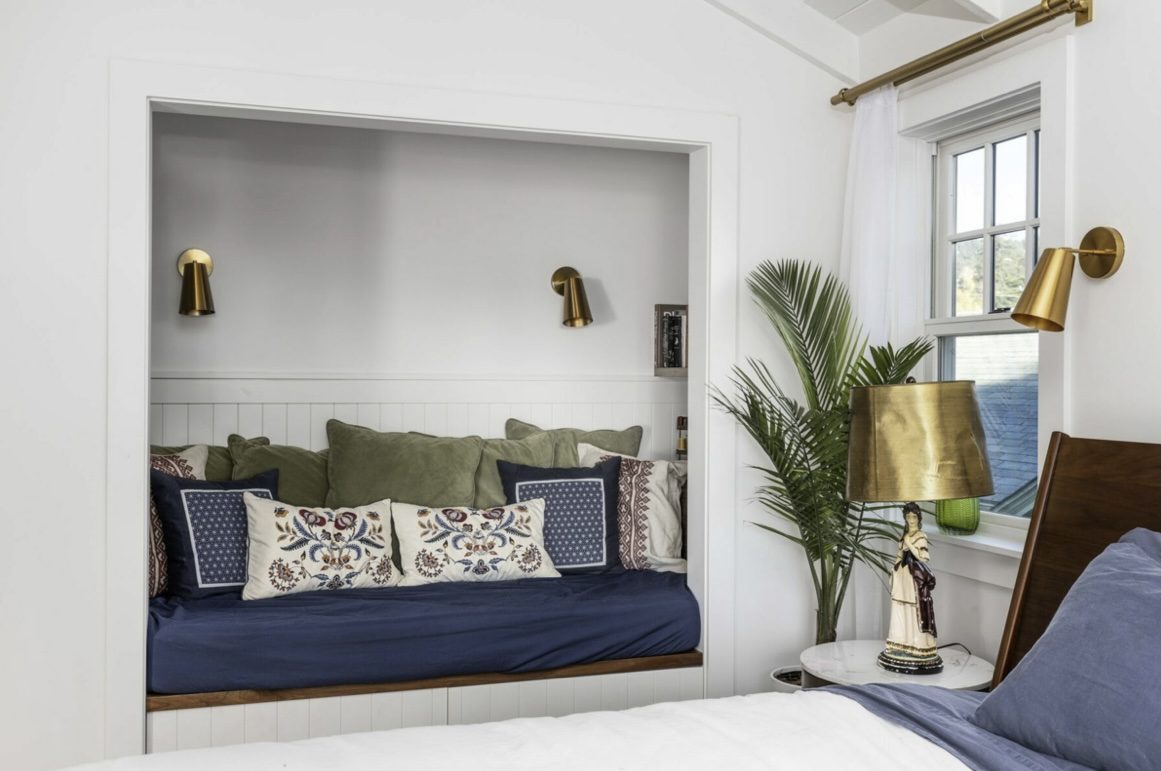
Interior design details were carefully worked out
Retaining Character While Upgrading Performance
One of the guiding principles of the renovation was to retain and enhance the best parts of the existing house wherever possible.
In the living room, exposed wood trusses and painted wood decking were preserved, maintaining the warmth and character of the original space. The existing roof was uninsulated so we added insulation and a vapor barrier above the existing structure, significantly improving comfort and long-term durability while keeping the visible character intact.
Original wide plank wood flooring, trim, and simple built-in bookshelves – installed by the clients prior to the renovation – were also retained and integrated into the new design.
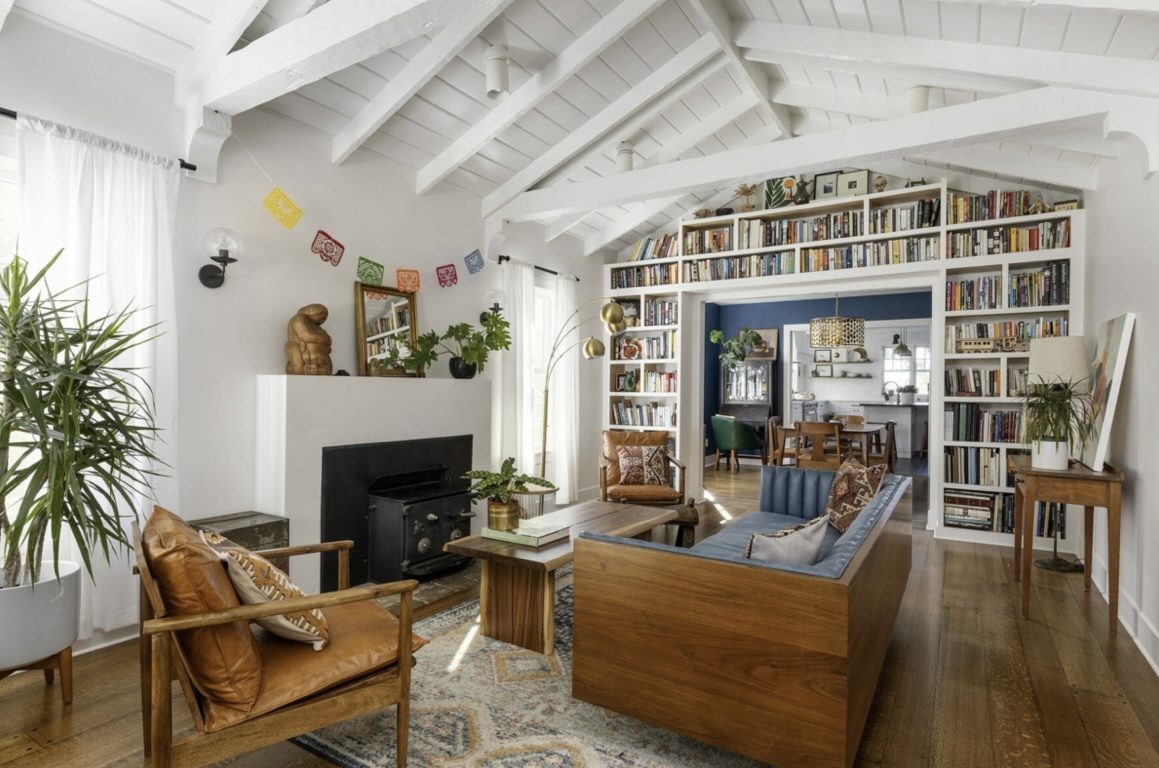
Living room interior with retained existing exposed trusses, wood ceiling decking, flooring, and bookshelves
Reworking Layout, Walls, and Sightlines
While some elements were retained, the overall layout of the house was significantly improved.
Interior walls were selectively removed or adjusted to improve flow, sightlines, and relationships between rooms. From the living room, views now extend through the house toward the gardens beyond.
Natural Light as a Design Foundation
Natural light was a primary design driver throughout the renovation.
Windows were carefully placed to bring daylight into nearly every room from more than one direction. This pattern creates a sense of balance and well-being while reducing reliance on artificial lighting.
Skylights over the staircase, in bathrooms, and along circulation spaces further enhance brightness and orientation within the house.
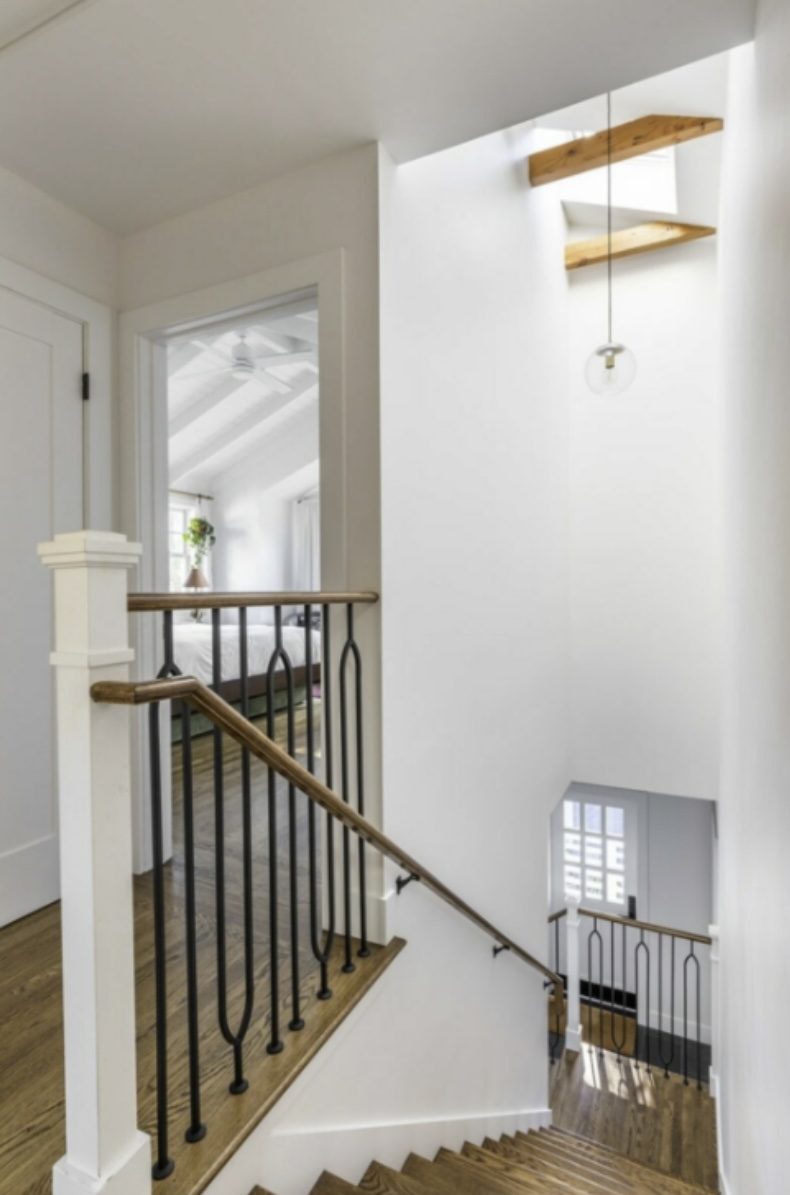
Staircase with skylights, metal railing, and exposed rafters
A Kitchen Designed Around Daily Use
The kitchen was designed to reflect exactly how the family cooks, gathers, and moves through the space.
Custom cabinetry supports both function and calm. A walk-in pantry provides generous storage that stays visually out of the way, allowing the main kitchen to remain uncluttered.
A pivot-door coffee station allows doors to disappear fully when in use, reflecting real daily habits rather than idealized ones.
Material contrast – natural wood, white cabinetry, playful tile, and varied metal finishes – adds warmth and depth without visual noise.
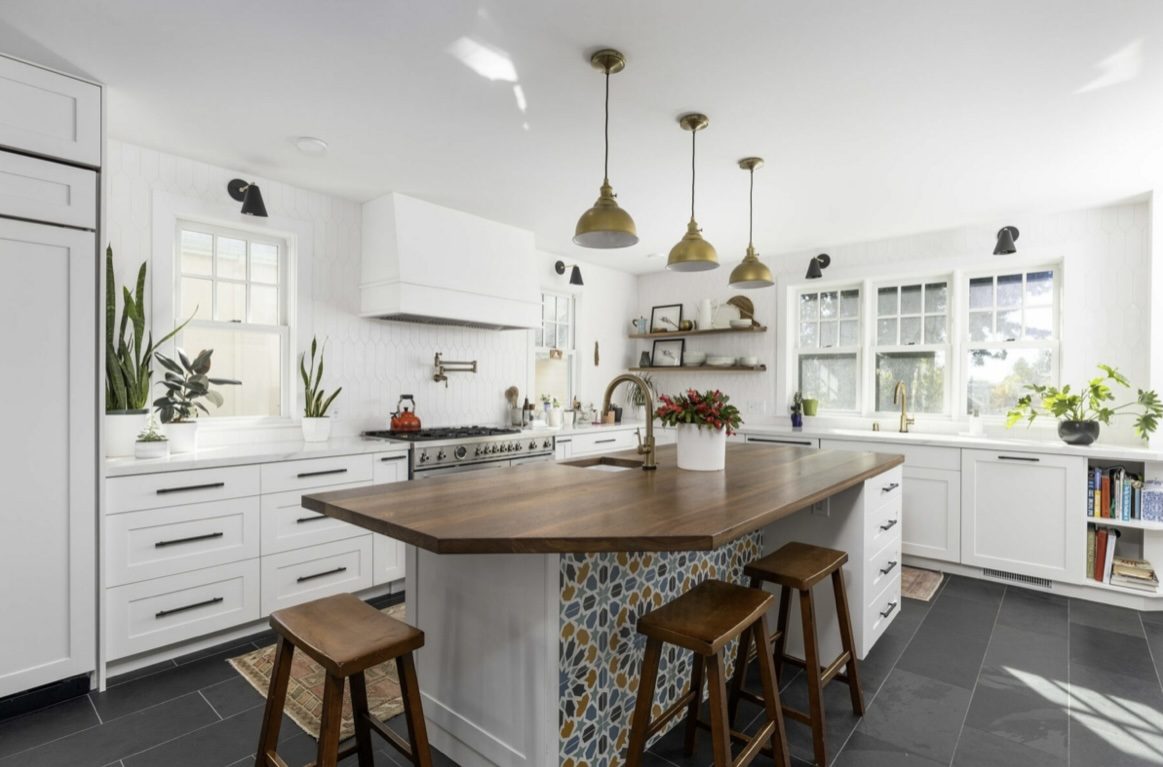
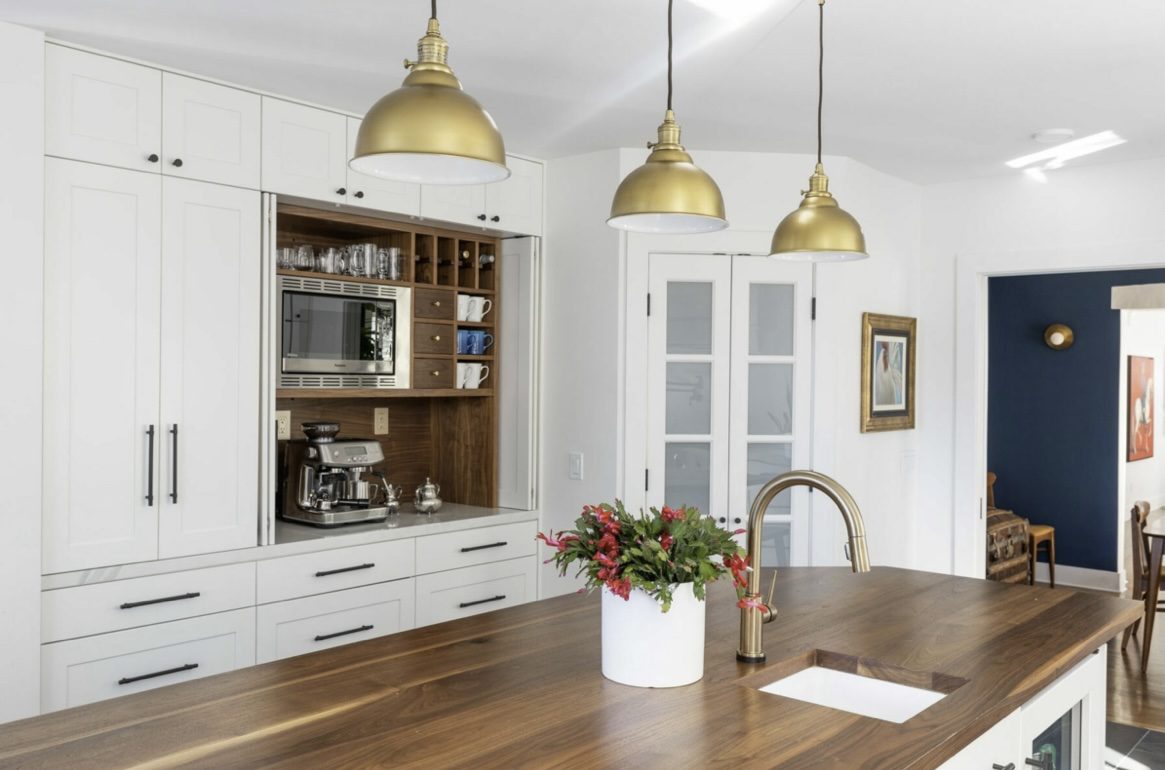
Kitchen interiors – organization, dedicated coffee station, play of different materials – sightlines to front of house, upstairs, and rear garden
Storage as an Organizing Strategy
Throughout the house, storage was treated as a core design element.
Skinny pull-outs, utility cabinets, and carefully planned closets make use of every available space.
This attention to storage supports order and ease, reducing the visual clutter that can undermine calm in a busy family house.
Laundry and Mudroom as Daily Infrastructure
The laundry and mudroom function as a main family entry.
This space includes ample cabinet and closet storage, places to hang laundry, and room to manage everyday items out of sight.
By concentrating these functions in one well-designed room, the rest of the house remains quieter and more orderly.
Vertical Connection and Circulation
The new staircase connects the ground floor and first floor both physically and visually.
A metal railing, skylights, and exposed rafters transform the stair into a light-filled spatial moment rather than a purely utilitarian passage.
The stair reinforces continuity throughout the house while clearly organizing circulation.
A Calm and Intentional Master Bedroom
The master bedroom was designed to feel restorative rather than oversized.
Exposed rafters and a ridge beam add character, while a bay window creates space for seating. A separate cozy reading nook was an important feature for the clients.
The room balances simplicity and comfort, offering a quiet retreat within the larger family house.
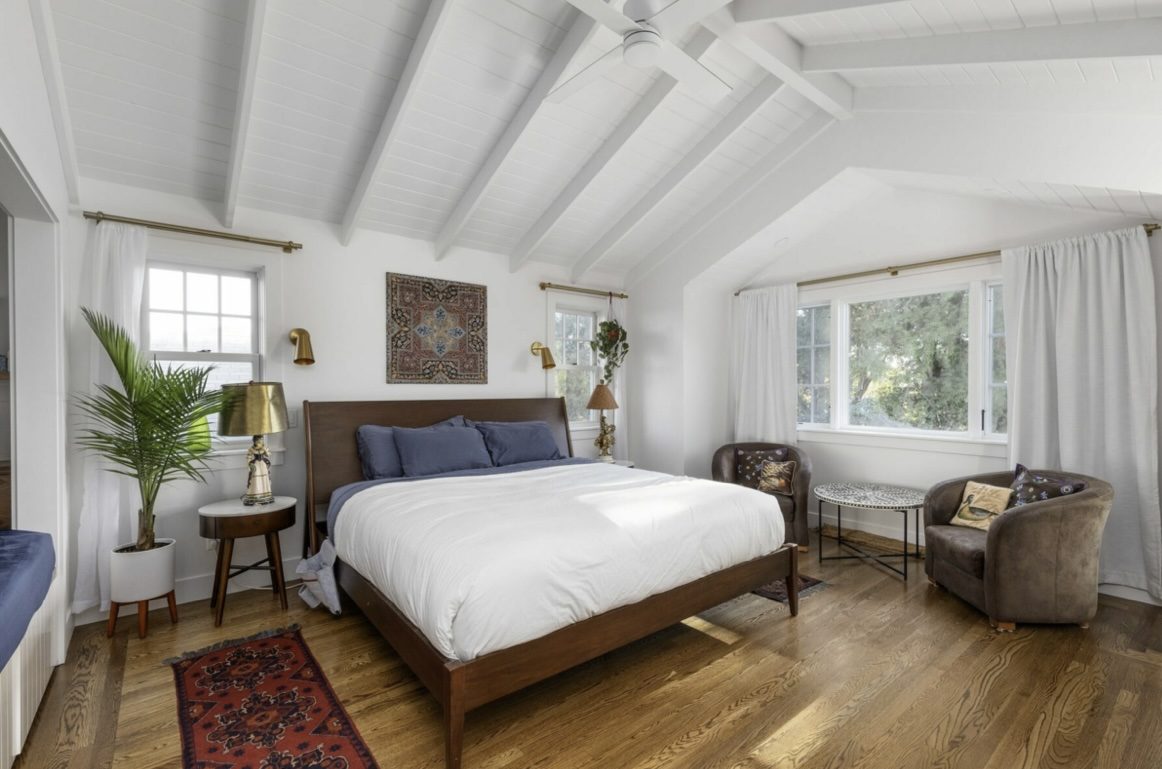
Master bedroom with bay window, seating area, reading nook on the left, and exposed ceiling structure
Dedicated Space for Focused Work
Working from home was a key requirement of the renovation.
A dedicated office was designed with high acoustic separation to support focused work and video calls. High windows and a bay facing the Oakland hills frame a sweet view of the iconic Mormon temple.
This separation allows work to happen without overtaking the rest of the house.
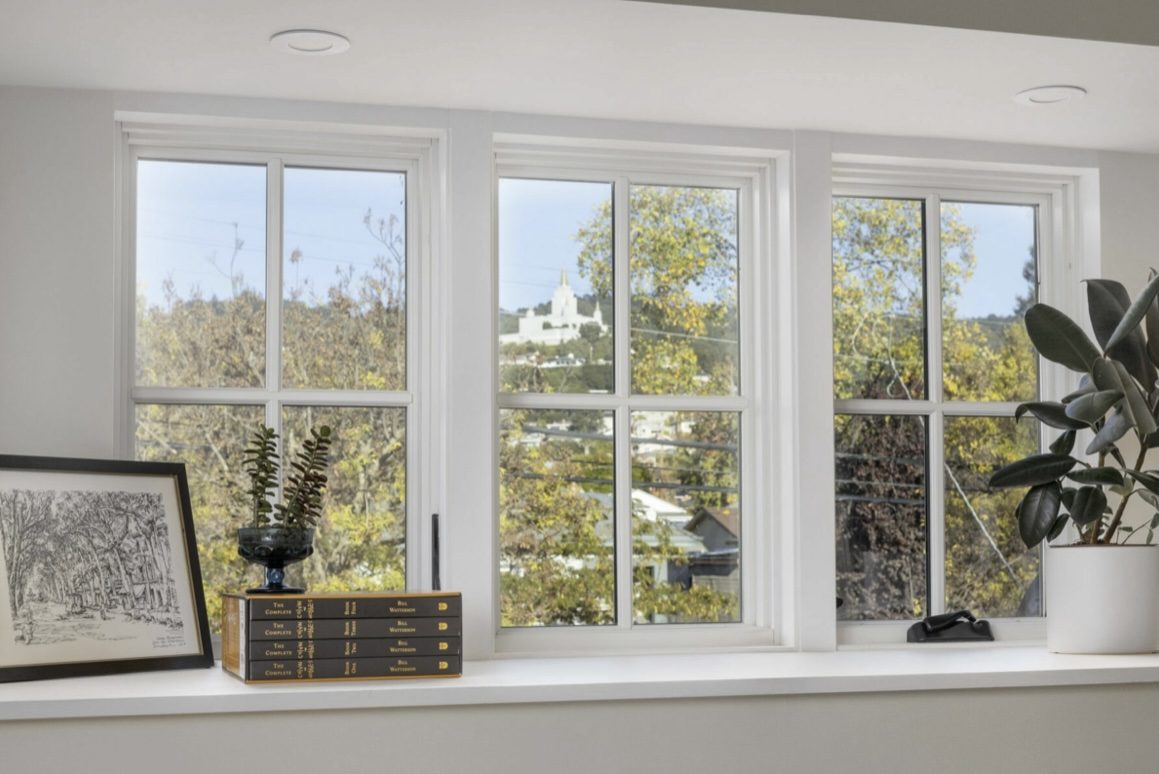
View of Oakland’s Mormon temple from office
Bathrooms as Light-Filled Rooms
Bathrooms throughout the house were designed as real rooms, not secondary spaces.
The master bathroom is a sanctuary that features vaulted ceilings, skylights flooding the roof with light, and freestanding tub framed by the gabled ceiling. A separate shower and ample storage support daily routines with ease.
Secondary baths include playful mosaic flooring, arched alcoves, floating vanities for easy cleaning, and pools of light.
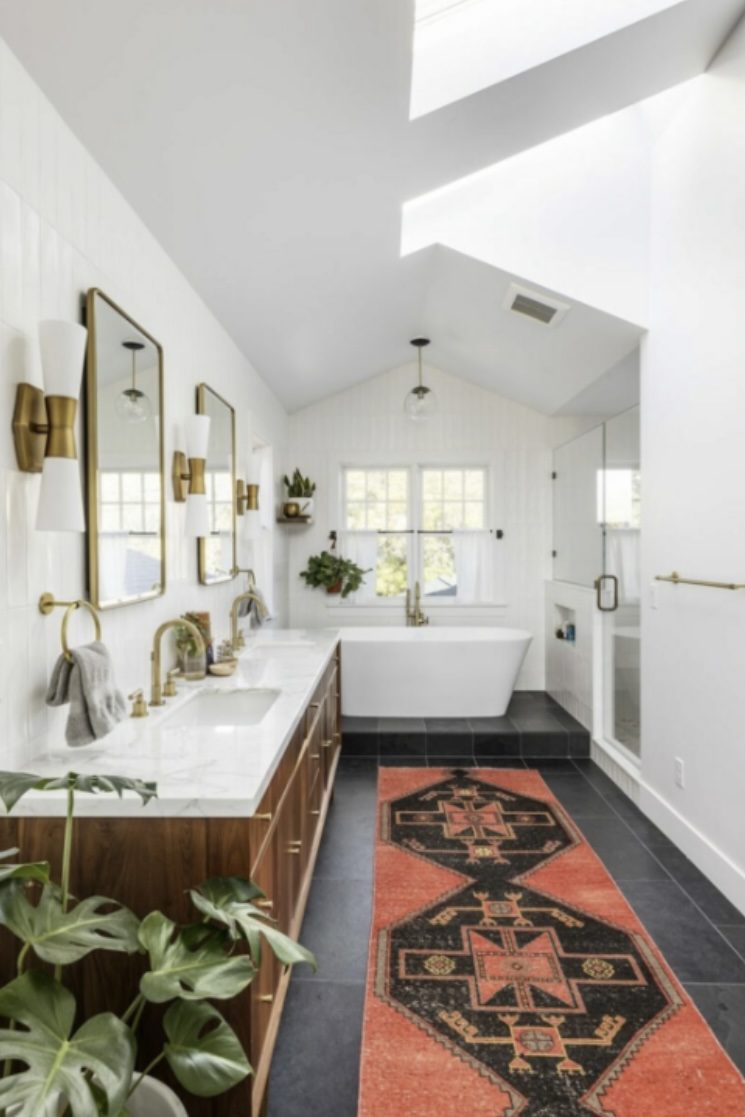
Master bathroom with vaulted ceiling, skylight, and freestanding tub
Extending Living Space Outdoors
Along with transforming the cottage into a larger family home and workspace, we coordinated closely with Miller Landscape Architects to optimize the use of the yard.
Careful consideration was given to indoor-outdoor flow, relationships between outdoor spaces and living spaces at both the house and accessory building, and areas for cooking, seating, and gathering, to optimize use of the outdoor spaces day and night.
Ample sunny and sheltered space was created for growing food and spending time outdoors.
Gardens, Fire Pit, and Nighttime Use
The gardens were designed for daily use rather than formality.
A fire pit creates a cozy outdoor gathering space that feels private from the street, while a simple outdoor kitchen supports family meals and entertaining.
Exterior lighting allows the space to function comfortably at night, extending the usability of the yard throughout the year.
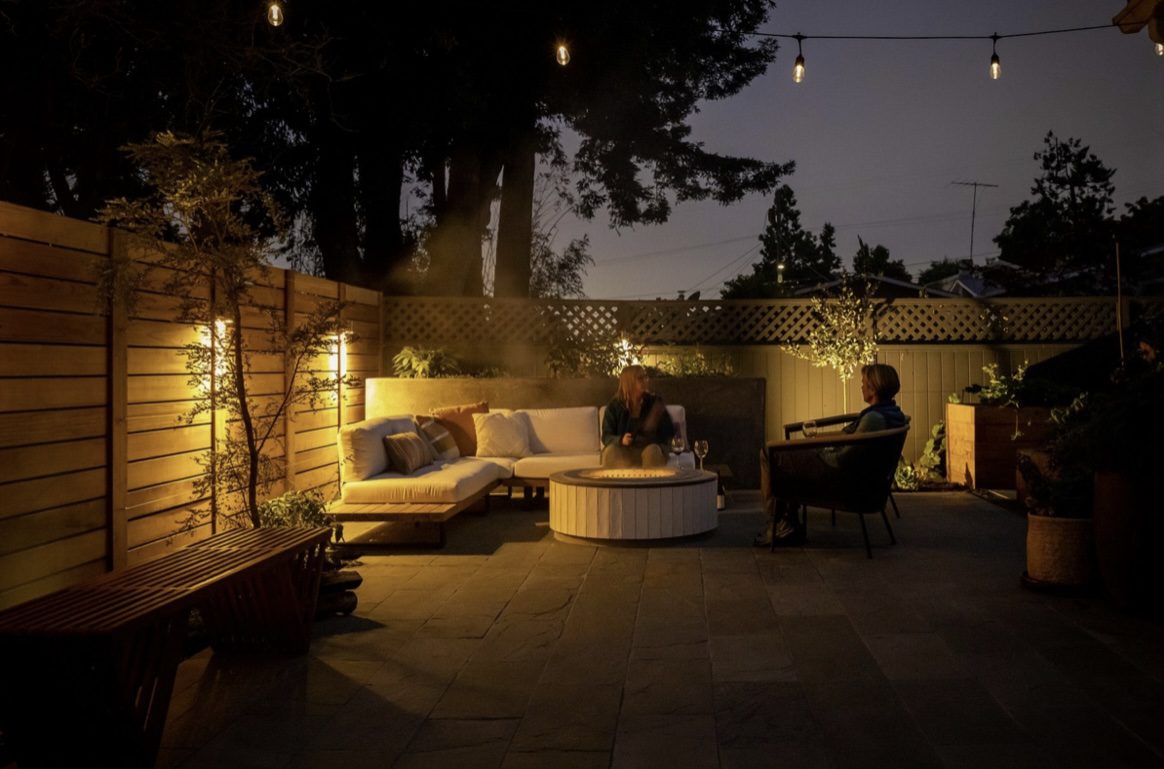
Backyard with fire pit, seating, planting, and evening lighting
Collaboration and Integrated Design
This project involved close collaboration with the clients, the builder, and the landscape architect throughout all phases of the renovation.
Saikley Architects provided full interior design services, coordinating cabinetry, finishes, lighting, and fixtures as part of a unified design process.
This integrated approach helped ensure consistency, clarity, and thoughtful decision-making across the entire house and site.
A Cohesive and Livable Family Home
This bungalow renovation demonstrates how thoughtful design, careful renovation, and attention to everyday use can transform a small house into a deeply livable family home.
By balancing openness and separation, old and new, interior and exterior, the house now supports a wide range of activities while maintaining calm and order.
It is a home designed to be lived in fully – supporting family life, work, learning, and rest over the long term.
Contact Saikley Architects